Top Healthcare Policy Themes of 2014

Yesterday on the Policy Prescriptions website curator Cedrick Dark, MD, MPH, FACEP, shared his list of top tweets in 2014, each referring to a story or graphic. I have with gratitude to Dr. Dark recast that list below for Pub patrons, highlighting the key policy area focused upon.

Cheers,
  ~ Sparky

Medicaid Expansion: Will it really reduce ER utilization?
A story by @sarahkliff  on January 2nd in the Washington Post

Population Health: How much of the US’s poor performance on value can really be explained away?
A
graphic shared by @davidmwessel on March 3rd

Industry Consolidation: Will it be a case of Be careful what you wish for . . . ?
A story by @philgalewitz in the Washington Post on April 21st

Big Data & Health Policy: What can two Medicaid studies – Massachusetts and Oregon – teach us about public health statistics and policy?
A post in The Incidental Economist by @afrakt on May 7th

Mental/Behavioral Health: Is Medicaid expansion an effective way to address the epidemic rise in MH/BHS and substance abuse?
A graphic from the American Health Counselors Association on May 27th

Physician Shortage: What’s the truth – can we know – about Healthcare Reform’s impact on physician supply relative to demand?
A story by @amitabhchandra2 in Vox on July 31st

Cuts in Provider Reimbursement: Is cost cutting via physician compensation having unintended – dire – consequences?
An Op-Ed piece in the New York Times by @sjauhar on July 21st

Value in Healthcare: “People bankrupt themselves to get healthcare and that means it’s incredibly valuable, unless one thinks people are incredibly stupid.”
A tweet shared by @amitabhchandra2 on May 6th

The Non-Healthcare Side of Healthcare: Only 20% of health outcomes is determined by clinical care
A graphic provided by @CHRankings on October 25th

Politics of the Affordable Care Act: Will Jonathan Gruber become the sacrificial lamb for an administration and congress that duped the stupid American voter?
A CNN news piece by @jaketapper on November 19th

National Healthcare Spending: Where does $2.9 trillion get spent?
A graphic in the Washington Post on December 3rd

The Uninsured: The Administration claims 10 million have gained health coverage. Not everyone agrees on the methodology used.
Official release from @WhiteHouse shares this and other portended accomplishments in 2014 on December 19th
Hpapyy Hlodiyas

Hpapyy Hlodiyas

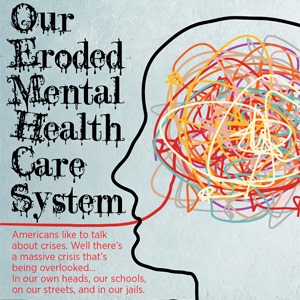
ErodedMentalHealth_THUMBIf you have followed my blog over the past few years, you know by now that I am passionate, and write rather frequently, about mental and behavioral healthcare policy. So I first wanted to share with you an informative and powerful infographic (below) from the Best Social Work Programs website.

And secondly, I wanted to take just a moment to remind you this is an especially hard time of the year for someone you very likely know – and may even know very well. The absence of friends and family lost is felt more acutely. Pressure is greater to suppress feelings of anxiety and sadness. Failures of achievement must be reconciled with another year’s passing.

Try to remember that with few exceptions the person you know who may be struggling with mental and/or behavioral health issues finds very little joy in having a negative influence on your holidays. They did not choose to be saddled with their disease any more than those with Diabetes, Heart Disease or COPD chose their lots in life.

Here’s hoping that messages like the one below will continue to build public awareness and find their way into more proactive mental/behavioral health policy in 2015.

Cheers,
  Sparky

ErodedMentalHealth

The Cleveland Clinic’s Big Gamble

When I first started speaking on the Affordable Care Act back in the fall of 2010 one of the observations I liked to make was about needing to change the cost trajectory resulting from chronic disease. I would say something to the effect that, “if we are somehow successful at becoming more efficient, expanding access and affordability – none of it is going to matter if we cannot become a healthier country.” I didn’t have any research or statistics to support my thinking – it just seemed axiomatic given a fundamental understanding of disease incidence, costs and demographics.

My good friend and colleague Dr. Toby Cosgrove, President and CEO of the Cleveland Clinic (okay, so we’ve said hello to one another on a few flights back and forth from Ft. Lauderdale) posted an article on his LinkedIn blog this morning: New Way to Fight Chronic Disease that puts some meat on the bone of my rudimentary understanding of public health. Dr. Cosgrove notes some very basic facts about chronic disease management in the United States.

  • The CDC estimates that 75% of all healthcare expenditures in the US are attributable to chronic disease ($2.85 trillion in 2013)
  • Almost one out of every two adults (117 million) is afflicted by chronic illness
  • More information on the impact chronic disease has on our healthcare system can be found on the CDC website.

Dr. Cosgrove’s article introduces the Cleveland Clinic’s recently opened Center for Functional Medicine, which is a collaboration with the Institute for Functional Medicine led by Dr. Mark Hyman. The thematic focus of the Center is to take a more holistic approach to individual health and wellness and driving at the underlying causes of chronic disease – whether related to genetics, environment or lifestyle.

Functional Medicine is not intended to be a replacement of traditional medicine. We aren’t talking about spiritual healing, wild berries and unproven treatment regimens. It is intended to recognize and address the underlying causes of chronic disease that, if effectively addressed, will reduce the need for traditional medicine. But it also should be able to compliment and enhance the effectiveness of traditional medicine.

Given the magnitude of the problem and the impending consequences on our country it is exciting news that a medical institution no less than the Cleveland Clinic has chosen to proactively attack this problem with pragmatism and innovation. That’s the good news. Now here’s the bad: human nature is an incredibly obstinate challenge that isn’t likely to bow in the face of the best efforts of worthy institutions such as the Cleveland Clinic.

Understanding the underlying causes that lead to chronic disease is one thing. Being able to change human behavior in a manner that addresses those causes is quite another altogether. And this tees up a host of moral policy conundrums where we start to look at responsibility of the individual versus society. Demographics will intensify these to a level that I suspect will lead to significant social unrest.

So while I applaud the Cleveland Clinic for taking the bull by the horns in seeking to address this immeasurable challenge facing us, I do hope they understand what happens if they let go.

Cheers,
  Sparky

Do Hospital Amenities = Value?

Do Hospital Amenities = Value?

33ec2fbThere was an article in yesterday’s Dallas Morning News, Hospitals compete for patients with creature comforts, by Jim Landers that shares how hospitals are making huge capital expenditures in the name of patient satisfaction. The purported impetus behind this is in recognition of Medicare payments tied to patient-satisfaction scores under the Hospital Value-Based Purchasing Program. But there also has to be an element of competitive market positioning that is more to do with attracting a patient than satisfying a patient.

In either case, an obvious concern has to be to what extent, if any, more attractive aesthetics, better tasting food and higher speed Wi Fi access impact patient outcomes. Recall, Value = Outcomes / Cost. So what must be considered is how patient perceptions and experience factor into outcomes. Whereas one might  subscribe to a stricter definition of did the patient get well? others might want to consider is the patient happy?

From a policy perspective, to what extent should we be using tax dollars to make people happy versus making them well? From a holistic vantage point we want to consider those two objectives part and parcel of a singular goal. But again that old bugaboo raises its head: to the extent we measure achievement of a holistic goal by using objective criteria to assess subjective reality we risk wasting resources chasing an elusive butterfly.

Of course, the real irony here is that public policy designed to incent market-oriented provider behavior that improves value maybe doing more to increase the denominator than the numerator of the value equation. Makes you wonder whether we would be better off to just let the market develop solutions without artificial incentives – or whether it would make sense to stop pretending that healthcare is an industry that could ever provide value for a broad population left to its own devices.

Thoughts?

Cheers,
  Sparky

150-to-1 Reasons To Be THANKFUL

Sometimes the stars align. Sometimes your best efforts can make a difference. Sometimes you’re just in the right place at the right time. Tomorrow is Thanksgiving and this is the 150th post I have written for Sparky’s Policy Pub.

I had thought, for a brief moment mind you, of coming up with 150 different healthcare policy oriented reasons for being thankful and sharing them. But if there is one thing I have learned too well over the past 149 posts it’s that in a world of electronic media expanding at an accelerated rate it is extremely difficult to attract the attention of anyone interested in reading a paragraph – let alone a boring list – on public policy issues.

So I settled upon one policy-oriented reason to be thankful that is both timely and in keeping with the American heritage and tradition of Thanksgiving: I am thankful the Tea Party has gone into hiding, at least for now.

Writing this morning in Politico, Kyle Cheney asks the question: Is the tea party ready to chill out? Cheney posits that at least some portion of the Republican Party’s success is owing to their being able to smartly steer clear of TP challengers that historically have split the party against itself. And rather than swinging for the fences on every issue at least some TP strategists appear to be taking a more pragmatic approach, accepting that getting something – anything – is a lot better than getting nothing.

The Democratic Party is going to face its own fringe albatross dividing its constituency in the years ahead, particularly leading into the 2016 election. And their situation may be even worse because of some recent success the far left has had in influencing legislation. They have come to taste an unsustainable success that the Tea Party by and large has not. That will, of course, change, as Chuck Schumer and others have already begun signaling as they start to distance themselves from the party’s far left.

Politics in America can often best be characterized as a pendulum of public opinion: as the public comes to realize their lives are not better under one party they begin to have hope in the other. Of course, overall voter turnout earlier this month – at 36.4% – was the lowest it has been since 1942, perhaps an indication that 6 or 7 out of every 10 Americans have lost hope in either or any party, or could really care less about public policy until it is in some fashion proven to affect them directly.

That lack of interest in public policy is in good part because it has been overwrought by the rancor smell of partisan politics in an age of media-driven elections. The media’s complicity is our own: we like to be entertained, as I have written here before. Just ask ad agents at Fox News or MSNBC what type of programming advertisers will pay the highest rates to underwrite. Entertainment is found on the fringes of both parties because their behavior is usually characterized as aggressive, controversial and uncompromising.

But it’s the very lack of compromise that has thrown this country into a political tailspin. Without wanting to find myself disappointed to the point of joining the 7 out of 10 who don’t care what happens in public policy I hope the Republican Party’s ability to gain control of Congress is a harbinger of future hard fought debates on the floors of both chambers that will result in legislation that neither party loves but both can live with in the interest of knowing that doing something is better than doing nothing.

It will be interesting to see whether the likes of Ted Cruz, whose star for better or worse is at least for now firmly affixed to the Tea Party, will choose personal political ambition over progress and seek to make the 114th Congress as dysfunctional as the few before. Who wants to bet he’ll choose the road of constructive compromise? I’ll give you 150-to-1.

Happy Thanksgiving!

Cheers,
  Sparky

Ferguson and the Politics of Healthcare

Ferguson and the Politics of Healthcare

f01_59546488On August 9th, when campaigns across the country were beginning to ramp up for the 60-day sprint to the November elections Michael Brown was fatally shot during an altercation with a Ferguson, Missouri policeman, Darren Wilson. The circumstances of the incident – primarily that Mr. Brown had been unarmed – set off a firestorm of protests in the hot summer nights of this St. Louis suburb.

Those flames were reignited late yesterday afternoon when it was announced that the grand jury reviewing the case would not indict Officer Wilson on any charges stemming from the incident. From relief to acceptance to disappointment to outrage and insolence to rioting and looting, the decision has placed the nation’s issues of inequality front and center again ironically enough just before the Thanksgiving holiday.

In the final days leading up to the November 4th election Democratic Senate candidates in the South sought to use racial tensions as a tactic to encourage support and voter turnout of the African American population. As we know now that effort didn’t work out so well as Republican David Perdue defeated Democratic candidate Michelle Nunn in an open Georgia race while Republicans Thom Tillis and Tom Cotton defeated Democrats Kay Hagan and Mark Pryor in North Carolina and Arkansas, respectively.

If Bill Cassidy, the Republican candidate facing Democrat Mary Landrieu in Louisiana’s December 6th runoff election, wins (polls currently show he has a substantial lead), Republicans will have secured a 54 to 46 advantage in the Senate – a pickup of 9 seats and control of the United States Congress. And thus, if you were to believe the more optimistic sort in the Republican Party, they have secured a mandate to dismantle the Affordable Care Act, whether in total or piece by piece.

That was I believe, until yesterday. What is happening – what has happened – in Ferguson is community self-destruction on a par with some of the worst cases this nation has ever seen. The unsupportable actions of those rioting and looting belie and disguise the very real and troubling root causes of community and individual impoverishment that are at the heart of the anger and frustration playing out in Ferguson and across the country.

There are very real income and wealth disparities in this country, and they continue to get worse. I have maintained this is, in part, a byproduct of foundational and structural changes occurring in the US economy resulting from deindustrialization that could take several generations to play out.  It is clearly also the result of a failed welfare state that has irreparably influenced the social and individual psyche of what value means in a market economy.

Regardless of what got us here, with the chasm of inequity growing daily how can it be a politically practical reality that Congress should rescind the efforts to provide access to an affordable, minimum level of quality healthcare in this country? And with the aforementioned structural obstacles facing our economy how can we not seek to proactively reign in the runaway healthcare costs that are putting such a tremendous drag on economic growth?

Look deeper into what is happening in Ferguson and cities across the country. Recognize that under the foolish, destructive and misguided actions of the violent few is a growing population of impoverished from every race, creed and nationality in this country. How can we go backwards on healthcare now?

Cheers,
  ~ Sparky

Medicine’s Tragedy of OR

Thanks to Dr. Paul Wiseman for sharing the NY Times op-ed article,  How Medical Care Is Being Corrupted, via LinkedIn this afternoon. Article authors Pamela Hartzband and Jerome Groopmannov are on the faculty of Harvard Medical School and co-authors of Your Medical Mind: How to Decide What is Right for You.

    The article deals with an old nemesis in healthcare policy: individual incentives. More particularly, how the misalignment of individual incentives can often be the Trojan horse befalling well-intended policy initiatives.

    Idealistically, as patients we we want our doctors to have our best interests in mind at every touch point of our experience with them. And fortunately, I believe that continues to by and large hold true. But the forces pushing against physicians to maintain that altruistic objectivity and autonomy on our behalves is being vehemently tested by what the authors describe as, “financial forces largely hidden from the public [that] are beginning to corrupt care and undermine the bond of trust between doctors and patients.”

    Though coming from different sources the common thread is the push toward value-based payments. I have written here in the past on value and value-based healthcare. The theory is market-based sound logic: value = outcomes/cost. The challenge, as I have written before, starts within a few nanoseconds after you start to contemplate how to objectively assess outcomes and whose value are we talking about?

    As Hartzband and Groopmannov importantly note, there is a challenging conflict between what is perceived as valuable for population health (i.e., in the aggregate) versus what is valuable for individual health. Physician payment incentives are increasingly being created based upon broad public health metrics (e.g., incidence of hypertension and hyperlipidemia, which are both often treated with medications that can be very effective – but also have significant side effects that can vary significantly from one individual to the next).

    So it doesn’t take too many connected dots to imagine the potential conflict of interest between wanting to hit the metrics versus doing what’s in the best interest of the patient. And the challenges are compounded when it’s not just the rewards that are in play – but the potential punishment for not following prescribed protocols from third parties – e.g., poor ratings publications and/or loss of base payments. That’s what is known in the non-scientific world as getting it coming and going.

    So what the authors propose is the establishment of legislation that would make public information available on, “the hidden coercive forces” that could be at the root of physician-patient incentive misalignment due to the aforementioned consequences of well-intended policies. That may not be enough, but it’s an important recognition that the policies may not work as intended. I note, however, that they do not recommend going backwards to the past era of, “paternalism, where doctors imposed their views on the patient.”

    Progress often means a couple of steps forward and a few back. Trying, learning and adjusting. This is a fundamental difference in  thinking among healthcare policy types that believe we just have to give Adam Smith’s invisible hand wider breadth. Way back in 1995, Jim Collins (Good to Great) wrote an article, (Building Companies to Last), in which among other areas of recognition – that even back then noting that relying on lessons of the past would not suit us well in a world of transformational change – he discusses embracing the genius of the “and.” This is a theme that has pervaded much of his work since.

    Too often those critical of policy initiatives jump for self-satisfactory joy whenever they come across fair and objective criticism of those initiatives. But such criticism, if you can get by the politics (yeah, I know), doesn’t have to be viewed through the prism of the Tranny of Or. It can be viewed as an opportunity to learn and work toward the Genius of And.

    Cheers,
      ~ Sparky

Photo Credit: Alex Merto

Stupid Is As Stupid Does

If you haven’t heard or read about the recent uncovering of remarks made by Jonathan Gruber in relation to the crafting and passage of the Affordable Care Act (i.e., ObamaCare: pub patrons will note I rarely use that term even though I have largely supported it), then it is most likely because you are stupid. Yes, sorry, but that’s the sad reality of affairs according to intelligentsia types like Professor Gruber.

Aaron Blake writing in the Washington Post yesterday argued effectively that Gruber’s remarks will likely have little effect on any legislative initiatives to fully repeal the ACA. And as Kevin Drum pointed out in MotherJones, while Gruber’s choice of wording may have been very poor, he is right in noting that most of the electorate knows very little about public healthcare policy – if that’s what Gruber indeed meant. To me, stupid implies the inability to learn. I think Gruber may have accurately depicted an electorate that is disinterested in and/or unwilling to learn. Even still, I question how someone supposedly so smart could be so stupid.
Whatever term might best describe the initial benchmark of the electorate’s understanding of healthcare delivery, policy and regulations back in 2010, it has certainly advanced substantially from then. I’d like to think I’ve contributed a smidgeon since I started this blog in May of 2012. Whether the ACA is repealed, amended or dismantled one line at a time (parish the thought – I read the whole damn thing) healthcare public policy debate between January 2015 and the November elections of 2016 promises to be as energized, contentious and fraught with misinformation and misunderstanding as ever.

And knowing that, I am hoping to take the PolicyPub to a higher level next year. I am hoping to invite guest bloggers representing differing perspectives and backgrounds. Through my firm’s recent strategic alliance with Healthcare Lighthouse we are exploring ways to collaborate on sharing of healthcare public policy knowledge and information in ways that bring real value to organizations involved in healthcare. I am hoping to reenergize our free private discussion group where healthcare public policy is debated based on the merits of ideas and beliefs, and not sound bytes and news clippings.

To accomplish this I am going to need help. I am going to need to find others who share my passion for wanting to learn, understand and share their knowledge on the inner workings of healthcare public policy – and more importantly, the impact of that policy on patients and provider organizations. If you know of anyone who would be interested in adding to the discussion, please have them contact me.

I would like to commit myself in 2015 to proving how wrong Mr. Gruber is: not only is our electorate not stupid – but neither by implication are they willing to allow college professors to determine the future of our healthcare delivery system while they sit back and accept what’s given to them.

Cheers,
  ~ Sparky

Effective Communication: A Shared Illusion

Effective Communication: A Shared Illusion

Shaw_George-001I wrote last week in my post, Mental Illness Is A Community Disease that I was planning to participate in today’s public listening session held in connection with the development of new criteria that will impact Certified Community Behavioral Health Clinics (CCBHC). Mandated under Section 223 of the Protecting Access to Medicare Act of 2014, the intent is to strengthen community mental health systems by establishing higher standards of care and better coordination and communication across individuals, organizations and agencies that provide assistance and care to individuals in their communities.

Among the five topic areas discussed today (see previous post), not surprisingly I found Care Coordination to be the most interesting because of the parallels I recognized between mental/behavioral health and post-acute/long-term care. These include:

both groups of individuals typically require help from both community-based services and supports, as well as healthcare providers, and the lack of sharing of timely information across those entities in both instances is a challenging obstacle to managing care;

both groups rely heavily on Medicaid to fund needed services and care – and so both are likely to increasingly have to navigate the world of managed care – which doesn’t bode well in light of the point above;

both groups have evidentially achieved significant benefit from taking a holistic approach to care;

there is a need with both groups to understand and address the impact that varying levels of cognitive awareness can have on patient activation; and

the ability to achieve sustainable wellness in both groups is often primarily dependent upon the ability to maintain meaningful, long-term connectivity with care providers (in particular where medication management is concerned).

Most importantly however, germane to – yet beyond just – the importance of care coordination, a key take away from today’s sharing of thoughts, insights and the occasional organizational promotion and positioning was the shared impact that ineffective communication has in mental/behavioral health as it does in post-acute/long-term care. And really, across all of healthcare as has been discussed here before.

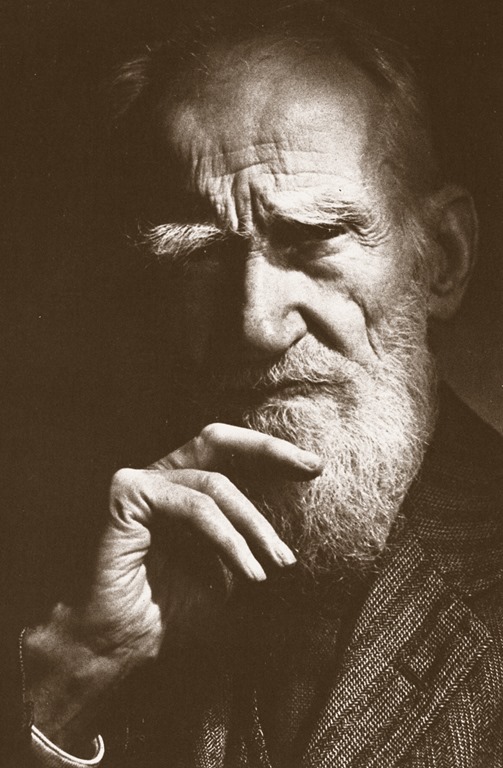
Effective communication is an art form, but it’s an art that can be taught and learned among willing participants. All too often, however, that willingness comes from a desire to be heard rather than to be understood – and to understand. George Bernard Shaw (pictured above) once wrote that, “the single biggest problem in communication is the illusion that it has taken place.”

Despite, or perhaps in good measure because of, all the technological advancements that have achieved miraculous achievements in healthcare we still fall well short of our potential to reduce human suffering because of a basic inability to communicate effectively.

I would like to see more sharing of experiences and best practices in care integration between mental and behavioral health and post-acute/long-term care: each probably could learn a lot from the other. But that would involve effective communication . . .

Cheers,
  Sparky

Mental Illness Is A Community Disease

Mental Illness Is A Community Disease

For those Pub patrons interested in being kept informed on happenings affecting the futureneeding-mental-health-care of mental health policy in the US. the Substance Abuse and Mental Health Services Administration (SAMHSA) will be holding a public listening session next Wednesday, November 12th, to solicit input and feedback on the establishment of criteria for  the Certified Community Behavioral Health Clinics (CCBHC) Demonstration Program, as outlined in Protecting Access to Medicare Act (P.L. 113-93, Section 223).

    The demonstration program was originally introduced as the Excellence in Mental Health Act by Senators Stabenow (D-MI) and Blunt (R-MO) and U.S. Representatives Matsui (D-CA) and Lance (R-NJ) and is an effort to strengthen community mental health systems by establishing higher standards of care and better coordination and communication across individuals, organizations and agencies that provide assistance and care to individuals in their communities. 

Under provisions of the Act, which was an extender bill used to delay until March of next year pending cuts to Medicare, a maximum of eight states will be selected to participate in a two-year demonstration program whereby the federal government will pay a matching percentage to those states for providing medical assistance for mental health services equal to what Federally Qualified Health Centers (FQHCs) currently receive for primary care services. This is strictly an outpatient clinic initiative (i.e., no funding for inpatient care, boarding, residential treatment).

Example services to be provided by CCBHC’s under the demonstration program include 24-hour crisis management, screening assessments and diagnostic services, outpatient mental health and substance-abuse services, primary care screening and peer support and counseling. The HHS secretary is to determine criteria for a clinic to be certified by a state as a CCBHC no later than September of next year. Next week’s session will solicit input on criteria such as,

  • staffing requirements: e.g., qualifications, areas of experience & expertise, licensing and credentialing, recruiting;
  • availability, scope and accessibility of services: e.g., looking beyond crisis management, determining basis of financial responsibility, evidencing service and referral relationships;
  • care coordination: e.g., relationships with other providers, integration into and with community services and agencies, enabling technical requirements;
  • governance, accountability & reporting: e.g., organizational authority, measuring outcomes, evidential reporting.
  • The secretary is also directed to provide guidance for the establishment of a prospective payment system for this demonstration program, no later than Sept. 1, 2015.

    As I have shared in this space numerous times before, mental and behavioral health services are underfunded and inadequately available to meet the growing needs across the country. We are learning more every day of the evidentiary benefits – to the individual and society – of taking a holistic approach to individual health and welfare. I am hoping to learn more next week whether and how this demonstration program might lead to addressing this critical concern – and I will report back what I learn.

    Cheers,
      Sparky