Once More Unto the Breech

Ah yes, here we go again. Yet another attempt by the Republican Party to repeal and replace the Affordable Care Act. This time, as reported by Sarah Kliff in the Washington Post’s Health Reform Watch, Republican Sens. Richard Burr (N.C.), Tom Coburn (Okla.) and Orrin Hatch (Utah) last week released, “…what is arguably the most complete Obamacare replacement plan offered by their party to date.”

Entitled the Patient Choice, Affordability, Responsibility, and Empowerment Act (abbreviated as the “Patient CARE Act”) – it has a familiar ring to it, but read on – it is in certain enough ways similar to the Affordable Care Act that I was reminded of several works by Shakespeare. The first of course is the comedy, Much Ado About Nothing. The second is a quote from Hamlet: “the [Party of No] doth protest too much methinks.” And the third was a quote taken from Henry V, which I invoked as the title of this post.

Both Ms. Kliff’s piece as well as a Forbes’ magazine article written by Avik Roy provide excellent coverage in comparing and contrasting the two pieces of legislation, and I refer readers there for better explanation than I can offer here. To be sure there are marked differences in the way key concepts of healthcare reform are addressed in the Patient Care Act. But where the hypocrisy is laid bare is in noting the overarching points of likeness.

For starters, the Patient CARE Act is said by its own sponsors to have little impact on the federal deficit (i.e., budget neutrality) over a 10-year period following enactment. So much for conservative austerity.  It maintains the insurance restrictions on pre-existing conditions and benefits, though it shifts more risk back to the individual for maintaining coverage prior to such conditions. There is the concerted effort to expand coverage to poorer Americans, though less emphasis is placed on Medicaid while abandoning insurance exchanges.  It also recognizes the importance of attracting healthy individuals into insurance pools to thwart adverse selection.

The most significant difference has to do with financing. The Patient CARE Act would repeal most of the industry taxes on insurance companies, hospitals and medical device makers and replace that lost revenue by limiting the tax exclusion for employer-sponsored insurance to 65 percent of the average health insurance plan. This is a favored approach by many economists because of the regressive nature this historic tax preference, but given the impact it would have on millions of employed workers it’s not likely to gain much political traction even if Republicans do gain control of the Senate.

Despite key differences, however, what is interesting – or perhaps remarkable – to note is that the Affordable Care Act was used by Patient Care Act’s authors as the baseline upon which to develop healthcare policy. This is in marked contrast to claims of the Affordable Care Act being illegal, unconstitutional and/or socialistic. It almost appears as if there could have been a constructive and compromising effort for the two parties to work together in crafting the ACA, rather than the Republican Party being fixated in denying President Obama any modicum of political success.

For all of the cajoling, haranguing and caterwauling we’ve endured from the likes of Ted Cruz, Bobby Jindal, Marco Rubio and Rand Paul, this latest effort to appear politically constructive and contributing something meaningful to the healthcare policy debate comes off dreadfully sublime in comparison to the political rhetoric of the past several years. And its well placed timing only days before the State of the Union Address is of course par for the course in electoral hypocrisy.

When it’s all said and done I am left wondering whether we should retrospectively view the politial machinations and hijinks the Republican Party has wrought upon this country over the past several years as comedy or tragedy. Perhaps both. A number of Shakespeare’s best works after all were tragicomedies: Hamlet, Macbeth, Othello and King Lear. I only wish watching the Republican Party’s performance of political implosion would have been as entertaining.

Enjoy the SOTU Address! Could be some real fireworks in the great hall tonight.

Cheers,
  Sparky

Better Care, Lower Cost Act

Better Care, Lower Cost Act

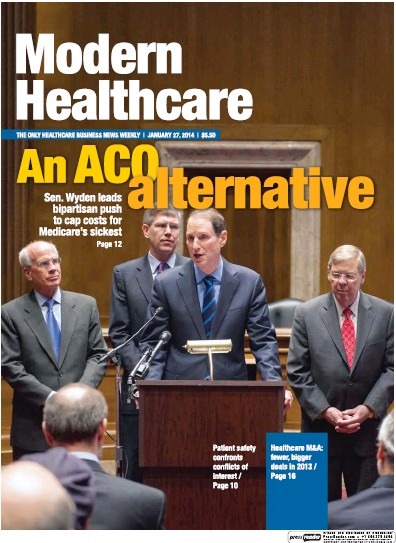
MHLast week, Sen. Ron Wyden, D-Or, together with co-sponsors Sen. Johnny Isakson, R-Ga., and Reps. Peter Welch, D-Vt., and Erik Paulsen, R-Minn introduced the bipartisan Better Care, Lower Cost bill (S. 1932/H.R. 3890).

Wyden is broadly thought to have the inside track to succeed Senator Baucus – who has been nominated as the US’s next Ambassador to China – as the successor chair of the Senate Finance Committee. But despite the bill’s referral to that committee and its bipartisan support it is unlikely to reach the Senate floor anytime soon. Thus, Congress.

Consider that according to CMS 68% of Medicare enrollees suffer from two or more chronic conditions and account for 93% of Medicare spending ($487 billion). And 98% of hospital readmissions involve beneficiaries with multiple chronic conditions. Consider that today the Medicare system creates barriers preventing healthcare providers from building on successful integrated care delivery models.

The core concept of this bill – a Better Care Program – isn’t new. BCPs have been developed in various states as teams of doctors, nurses and social workers working together under a capitated payment arrangement. In seeking to monetize the success of those programs, the Better Care, Lower Cost bill has elements of the accountable care framework promoted under the Affordable Care Act, but there are important differences:

                      1. The underlying incentive for care coordination of an ACO is the belief that such coordination will lower costs (i.e., utilization) and result in shared savings. Under a BCP, care coordination is germane to the program (though the troublesome utilization disincentive seems to me to remain).
    1. BCPs are not impacted by the ACO attribution rule, which prevents providers from actively targeting and enrolling the sickest patients.
    2. BCPs can use pricing incentives to encourage participation in high-value care and patient activation, whereas patients covered under an ACO are not limited by where they can seek care nor particularly incentivized to engage in care management.
    3. Every beneficiary of a BCP receives an individual care plan, whereas ACOs are not required to create a plan for every beneficiary.
    4. BCPs are specifically designed to target the chronically ill with the intent of effectively managing those conditions as efficiently as possible, whereas the ACO attribution rule prohibits differentiation of patient condition or need.
    5. In theory, BCPs lack the volume-driven incentives of a FFS payment system that characterizes ACOs.

    Coordinating care across healthcare providers is intuitively beneficial to a patient – in much the same way that coordinating parental responsibilities is to a child. But where this bill falls short from my reading is its tight focus on the clinical and pharmaceutical aspects of chronic disease/care management. Long-term care, though not defined, is specifically excluded from a BCP’s requirements, though some provision is made for coordination of Medicaid long-term care benefits.

    If we are serious about wanting to utilize care coordination as the silver bullet to lower Medicare costs associated with treating beneficiaries with chronic diseases, then we will have to recognize taking a holistic approach that extends beyond doctors, nurses and drugs is necessary. It does little good to provide affordable therapy when the patient has no means of transportation. It does little good to prescribe a beneficial diet when they have no stove to cook. It does little good to prescribe medications when the patient cannot remember when and if they took the prescribed dosages.

    A successful caregiving team under a capitated payment arrangement must also include the housing and community-based services and supports necessary for individuals with chronic disease to effectively manage their own care. The thinking behind the Better Care, Lower Cost Act is headed in the right direction, but it just seems to me whomever was responsible for drafting it doesn’t really understand chronic care delivery very well.

    Cheers,
      Sparky

The Virginia Mason Experience

Prospering by Standardizing Processes and Improving the Patient Experience by Andis Robeznieks, Modern Healthcare.

Dr. Gary Kaplan, chairman and CEO of the Virginia Mason Medical Center in Seattle Washington was recently interviewed about his experience of integrating Lean manufacturing process improvement at VMMC. Paul Plsek, a management consultant, has also written a new book about that experience: Accelerating Health Care Transformation with Lean and Innovation: The Virginia Mason Experience.

Below are a few excerpts from the interview:

On Organizational Change Management
Change is very, very hard in healthcare. We have learned a lot about change management. Not everybody wanted to come along. There were perhaps 10% who were early adopters, 10% who were very resistant to any kind of change and probably 80% of the people—and I’m talking about physicians, nurses and others—in the middle, just sort of saying we’ll see what happens and this too will pass.

I think we surprised people with our perseverance. Today, we’re possibly the furthest along of anybody in healthcare who’s consciously deployed a management method for more than a decade. But the most significant accomplishment is understanding that the pathway to improving quality and safety is the same pathway to lowering cost, and that involves relentlessly taking waste and unnecessary variability out of our processes. This creates a much higher quality, better patient experience.

It creates an opportunity for people to be empowered to use their best thinking to redesign their work. Our staff, who are closest to the work, are the ones who redesigned the work and in so doing reduced the burden of work.

On Physician Resistance
Traditionally, physician autonomy has been thought to be the sine qua non of professionalism, and that only we know what’s in the best interests of our patients. At Virginia Mason, we’ve been able to move from that approach and we understand that healthcare is impeded, not facilitated, by the notion of physician autonomy. Our physicians are actively engaged in supply-chain initiatives that standardize prostheses. One of our early rapid-cycle improvement events in 2001 was standardizing laparoscopic cholecystectomy trays, enabling us to save $700-$800 for every case by getting all the surgeons to realize that customized setups were unnecessary. We found is that if we eliminated nonvalue-added variation, the result is we create time for the value-added variation that differentiates individual physicians from each other and for patient preferences.

On Measurable Improvement
One of the things I’m most proud of is we’re the only hospital in the U.S. to be named by Leapfrog a top hospital in every year that designation has been given. We reduced cumulative nurse walking distance in the hospital by 750 miles per day, which freed up more than 250 hours of time for direct patient care.

On Measuring Outcomes
Outcomes measures have eluded us in healthcare for a long time. We’re getting better, but it’s a challenge. The entire continuum of care is a challenge to measure, given that we have patients coming in for care from Alaska, Montana and across Washington state, and Walmart and the Pacific Business Group on Health send patients here for heart and spine and total joint care. So it becomes quite difficult at times to measure the entire continuum of care.
One of the interesting things we’ve learned is that standardizing processes is really important even when there is no incontrovertible double-blinded study evidence. The standardization in itself allows us to measure and then it allows us to eliminate defect-prone situations. If a team of people do things nine different ways, that creates opportunities for defects to occur, and that’s what we want to eliminate.

On the Impact of Healthcare Reform
We welcome the changes that are here and are coming. More transparency is critical, and it plays right to our sweet spot. If we are able to improve quality and safety and lower costs, that’s going to allow us to succeed in a marketplace that’s more driven by value than volume. We see reform as a catalyst to accelerate our work, and it’s going to help move the entire industry in ways that will improve quality and lower cost.

Policy Issue
VMMC’s process improvement initiative was launched before and thus independent of the influences of the Affordable Care Act. But of course it was not launched in a free market vacuum independent of industry regulatory influences. Dr. Kaplan welcomes the future impact of healthcare reform as an inducement – or at least catalyst – for change at healthcare organizations that don’t have the predisposed wherewith all to affect the kinds of change accomplished at VMMC.

Others are going to disagree. They will argue that innovation and performance improvement flourish best when individuals’ inherent incentives to act in their best interests are rewarded by market-driven rewards. But is that even remotely possible to achieve in an industry that is already so heavily regulated that market-driven incentives are but a myth that stand in the way of collaboration and coordination?

Cheers,
  Sparky

Big Data Meets the Value Paradigm

Big Data Meets the Value Paradigm

VDO-Option3FlatA little over a year ago I shared a post on healthcare pricing: Pick A Price, Any Price. I wrote about the challenges, difficulties and consequences associated with the frustrating disconnect between hospital charges and the actual costs of proving care in those hospitals. At the time I also referenced the work of Michael Porter and Robert Kaplan that was published in the Harvard Business Review article, How to Solve the Cost Crisis in Healthcare.

I am excited to share with you research inspired by that article that was recently completed at the University of Utah, spearheaded by Dr. Vivian Lee, the senior vice president for health sciences and Dean of the University of Utah School of Medicine. Highlights of the research were published in the article, Hospitals Are In the Hot Seat, on the University of Health Sciences’ Algorithms for Innovation web site.

In a nutshell, colleagues representing several industry disciplines worked together to explore how harnessing Big Data and applied research might help empower patients and healthcare providers with more timely, more reliable – and most importantly, most understandable cost information and how costs compare to care received and outcomes achieved.

We’re all familiar with Peter Drucker’s challenge that, “if you can’t measure it, you can’t manage it.” Though less famous but probably more meaningful – or at least pragmatic – was Drucker’s quote that, “what’s measured improves.” Historically for healthcare trying to measure, apportion and determine meaningful costs at a granular enough level where that information has timely and impactful use has been elusive.

Here’s hoping this work is another step in the right direction.

Cheers,
  Sparky

Healthcare 2014: The Untrends List

One week into the new year, and here I am already probably tearing at the limits of content relevancy, thinking about how to write something meaningful on what to look for in 2014. What are the emerging industry trends and drivers that healthcare executives need to understand and reflect in their 2014 strategic planning? What’s the competitive landscape going to look like? How will diverging synergies of clinical partnerships impact silo management tendencies? How many overused business school concepts can be stuffed into a blog post?

To be candid, I really wanted to write something here that was keen on unique insights and observations. That had a lofty air containing pearls of wisdom. But the more I thought about what to write the more daunting became the effort of where to start, what to include and how to organize my thoughts without losing you to confusion and boredom in the first paragraph.

And being confused myself under the weight of my inability to organize that thinking it dawned upon me that I was tripping over the most common intellectual obstacle: failure to accept that too often our desire to embrace the complex hides our fear of accepting the wisdom of simplicity.  And that reminded me of the scene below between Billy Crystal and Jack Palance in City Slickers. It epitomizes the challenge we have in accepting simplicity.

Curly’s One Thing

So what’s the ONE THING that healthcare providers need to focus on in 2014? Easy answer: the same thing they needed to focus on in 2013. And 2005. And 1919. VALUE. But just as our understanding of life can be both simple and difficult – so too can learning to strategically position a healthcare organization around value.

The concept of providing value is ancient.  Yet the ability to create, deliver and capture value is an increasingly important – and contextual – competitive advantage when resources become constrained at the same time demand is accelerating. Value-based pricing and cost reimbursement models are only a part of the value-driven healthcare paradigm. It’s the small top part of the value delivery pyramid (or perhaps iceberg is a more fitting analogy).

Critically important to understand is what the patient values. And even more important is accepting the processes that patients use for determining and comparing relative value does not easily lend itself to linear thinking or evidence-based protocols. Similarly, the individuals who create and bring value to patients cannot be made to fit into standardized care delivery machines. And understanding how they assess and compare relative value is every bit as important in creating a competitively superior healthcare offering.

Healthcare providers are increasingly being asked to share in the risk of care delivery economics. I know that must sound ironically distasteful to many, since they have already for centuries borne the ultimate risk of patient outcomes. But on the whole, I believe it’s an oddity of our healthcare financing system – not a perverse entrapment designed to reallocate resources away from production – that seeks to align the incentives of multiple participants around value.

If, however, that understanding is ultimately manifested in just measuring and promoting value – without creating and delivering value – value-driven pricing and reimbursement models will necessarily fail, whether that’s payment bundling, ACOs or medical homes. But – those organizations that learn to create and deliver value by strategically positioning themselves in lieu of the industry migration toward integrated care delivery will survive whether those new models succeed or not.

So my list of trends and drivers for 2014 is simple: value, value & value.

Cheers,
  Sparky

Republicans, Mandates & Long-Term Care

Back in October 1989 the conservative Heritage Foundation published Stuart Butler’s seminal work in support of the individual mandate concept. I disagree with the popular media’s characterization that the individual mandate is the lynchpin of the Affordable Care Act, but that is probably because I’m one of the few people who actually read the entire Act.

It is still noteworthy that the IM concept made its way from Butler’s effective argumentation in the Heritage Lectures to 1993 legislation introduced by Republican Sen. John Chafee of Rhode Island: the Health Equity and Access Reform Today (HEART) Act of 1993. The IM provision of the HEART Act was to take effect in January of 2005 (more than a decade after enactment). It was introduced as an option to the Clinton plan, which included a mandate on employers to provide insurance for their workers – a provision that many Republicans found very troubling.

It’s an inaccurate and implausible leap to posit that Republicans introduced and supported the IM before they were against it. You need to have political context to understand the IM concept included in the ACA is not the same as what was contemplated in 1993. Nonetheless, the HEART Act attracted 19 Republican senator sponsors or co-sponsors, including then minority leader Bob Dole. So it is also inaccurate to assert the IM is anathema to Republican thinking, and it is certainly more than a tad ironic that the current lot of Republicans would shut down the government over an issue they were previously willing to include as at least part of the US healthcare financing solution.

So now fast forward to 2013, and those crazy Republicans are at it again. But this time they’re sights are set on a much more difficult challenge: financing long-term care expenditures. At a hearing this past week on the future of long-term care care and how to pay for it, Senator Susan Collins (R-Maine), ranking member of the Special Committee on Aging, stopped well short of endorsing an IM mechanism to fund long-term care. But she sure sounded like it could be a viable alternative (see reference to HEART Act, above).

Senator Collins noted that long-term care is the, “major catastrophic health expense” facing seniors today. She added that, “families can only do so much…” and that, “a viable insurance mechanism” that could be public, private or some combination is needed to address this challenge.  “Even when people are educated about the risks of long-term care and are presented with long-term care insurance policies, we will not truly address financing without requiring everyone to participate,” she said.

Gee, I dunno, but that sure sounds like being in favor of a mandate to me. And it’s probably the only reasonable and pragmatic solution to ultimately addressing the realities of financing a comprehensive and compassionate approach to long-term services and support for those unable to afford such care. I wonder if Collins will be hung in effigy by the Tea Party for thinking about the contingent realities that must be addressed by a caring society when the failure of self sufficiency manifests in a loved one unable to care for themself.

Cheers,
  Sparky

The Pain of Mental Illness

Hidden not far at all beneath the tinsel and tapestry of joy that retailers and their ad companies ask us to gorge upon is the painful reality this “season” means to millions of individuals whose conscious awareness of emotional pain and loss is heightened at this time of year. For most of us in that boat it’s a time of year you just try and suck it up and get through. But for the millions of Americans and their families living with mental illness there is no emotional reprieve awaiting as the calendar page flips to January 1.

In June of this year, CNN reporter Wayne Drash was invited into the home of Stephanie Escamilla and her family to observe and understand the trials and tribulations of caring for a child with a mental illness. Her 14 year-old son Daniel (not his real name) has been diagnosed as having bipolar disorder with psychosis. Their story – of the deep emotional pain that attends mental illness – is chronicled in Drash’s story, My Son is Mentally Ill So Listen Up, featured on CNN’s web site.

Stephanie’s invitation was her way of trying to bring greater awareness and understanding of the challenges and caregiving concerns that have a tremendous impact on the informal caregivers of the mentally ill. And it was also her way of drawing attention to the tragic reality we face in this country that way, way too often treating mental illness is entirely reactive.

I’m not going to add anything here that hasn’t already been better articulated by clinicians and mental health practitioners in terms of advocating for the same proactive approach to diagnosing and treating mental illness as has been given to heart disease or breast cancer, as examples. I just wanted to share this story with you and hope you will take the time to listen. I think it is tremendously important.

Cheers,
  Sparky


They Did What ?!?!

Don’t look now, but something remarkable happened in Washington today: both political parties claimed they weren’t happy with a bill but passed it anyway. That’s what used to be known as compromise in Congress. And for House Speaker Boehner the House support he received was a well-deserved reward for having been put through a lot of – well, stuff.

I think he must be either trying to save his political life, discounting the value of it – or being sincerely candid. At a year-end press conference today he was openly critical of conservative organizations that have been the biggest obstacle to bipartisan compromise this country has seen since just before the Civil War, noting they have “lost all credibility” in being critical of a bipartisan budget deal before it was even released.

In obvious anger and frustration he accused – without identifying any groups in particular – those organizations that have hamstrung his speakership as “misleading their followers,” saying that, “I think they’re pushing our members in places where they don’t want to be, and frankly I just think that they’ve lost all credibility.”

On the budget bill, the Speaker noted it wasn’t everything Republicans would have hoped for, but it “takes giant steps in the right direction.” Wait. You mean like making a deal in the interest of your constituents instead of yourselves? Go on. Boehner went on to say that, “I came here to cut the size of government. That’s exactly what this bill does, and why conservatives wouldn’t vote for this, or [would] criticize the bill is beyond any recognition I could come up with.”

I’ve got a potential reason, Mr. Speaker. It’s because in the aspirational views of certain Republican opportunists that have jumped on the Tea Party bandwagon Democrats have the wicked wilesRemember this from Snow White?

Grumpy: Angel, ha! She’s a female! And all females is poison! They’re full of wicked wiles!
Bashful: What are wicked wiles?
Grumpy: I don’t know, but I’m agin’ ’em.

Thus the Tea Party and that ilk spent most of 2013 trying mightily to transform the Republican Party from the Party of No to the Party of Anarchy. But alas, with the passage of today’s two-year budget deal it would appear the Republican Party may have broken free of those reactionary shackles. With only 62 Republican defections, the House appeared to brush off criticism and partisan threats from conservative groups like Heritage Action and Club for Growth.

And kudos to Rep. Paul Ryan for saying that,“elections have consequences … to really do what we think needs to be done, we’re going to have to win some elections. And in the meantime, let’s try to make this divided government work.”

Let me attempt to restate that in a different manner: In a democracy, being a minority political party by only a very narrow margin is a frustrating position. There are two approaches to deal with that frustration: obstinate immaturity or constructive pragmatism. The Tea Party has favored the former. Today the Republican Party chose the latter. Without having to change their core beliefs they are a step closer today than they were yesterday to winning the elections Paul Ryan noted.

Cheers,
  Sparky

What’s Your Performance Improvement Strategy?

If you are a post-acute/long-term care provider still sitting on the sidelines waiting for a clearer understanding of how Healthcare Reform is going to impact your organization’s future, well then all I can say is, “Good luck with that – let me know how it works out for you.”

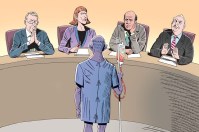
In an article published this past weekend (Medicare Seeks to Curb Spending On Post-Hospital Care), Kaiser Health News’s Jordan Rau reported on the wide variability in Medicare spending on post-hospital care across the county – and the attention that it is getting from CMS. Attention that is quickly turning to targeting: as in even more deeper cuts in reimbursement.
Several of the examples included:

Medicare recipients in Connecticut are more than two-times more likely to be admitted to a nursing home than residents in Arizona.

Medicare spends an average of $8,800 on a patient’s home healthcare in Louisiana – while spending $3,800 in New Jersey.

The rate at which beneficiaries receive post-acute services covered by Medicare in Chicago is three times the rate in Phoenix.

And the aggregate economic impact of variability in per capita spending is substantial. As the growth in post-65 age cohorts continues to accelerate both the inherent cost contribution (demand) as well as cost-push inflation (a result of seeking to satisfy that demand with scarce resources) is increasing. As reported in the Kaiser article, Medicare spending on PA/LTC, “has grown at 5 percent a year or faster in 34 of the nation’s 50 most populous hospital markets in recent years.”

The article goes on to describe the perceived reasons behind the variability that has captured CMS’s attention:

Misaligned incentives: Hospitals have not historically been economically impacted by the consequences of post-hospital care delivery, while PA/LTC providers have been incentivized to drive utilization based upon maximizing reimbursement rather than the appropriateness of the setting.

Information asymmetry: Very often PA/LTC referrals are a function of personal relationships and familiarity between those responsible for discharge planning and those responsible for marketing available beds.

Provider ambiguity: The evolution and confusion that today characterizes post-acute care services and settings (and the impact technology is having on care settings – e.g., telemedicine) often impairs market competition.

Lack of care coordination: While post-discharge readmissions have captured the popular media’s attention because of the ACA payment penalty, it’s the underlying lack of care coordination between acute and PA/LTC providers that results in cost inefficiencies extending well beyond avoidable readmissions.

These concerns, taken together with other indicators of potential waste and inefficiency (please refer to the article cited), will drive tremendous pressure in the years ahead to lower Medicare post-hospitalization expenditures (thus the chainsaw metaphor). How PA/LTC providers address these pressures will mean the difference between staying in business – or not.

BACK TO VALUE
When thinking about performance improvement as a vehicle to address this challenge remember this: more than any other singular criteria, successful PA/LTC organizations that survive the next decade will have learned to trade on value. Value in healthcare is quite simply the patient’s satisfaction with the care delivery experience divided by the cost to provide that experience (with the notable understanding that a patient’s satisfaction is typically augmented by their families’ satisfaction). With or without the Affordable Care Act, that is where the industry is headed.

But what does it mean to, “trade on value?” To help Pub visitors begin thinking about that I have provided a few fundamental questions that you might want to ponder – or discuss with colleagues:

  1. What’s most in demand?
    If Medicare, Medicaid and private insurers were to evaporate tomorrow, what core service offerings that you provide would be the most likely to still generate revenue? What distinguishes those services from others?
  2. Where do we fit in the care continuum?
    Forget the fancy charts and graphics of think tanks and consultants showing you where you fit. Think about the patients you care for every day from the perspective of their overall care experience: where does your organization provide the greatest value to that patient’s recovery along the care continuum?
  3. Who wants to work with us?
    How do potential partners in your market determine their value? Based on that understanding, can you enhance their value? What are the risks that you would lower it? Can you effectively address those risks?

  4. How do we protect and enhance our core value?
    In healthcare, more than any other industry, the innate ability to produce value is primarily attributable to direct caregivers. What should you be doing today to ensure you protect that most valuable resource? And what should you be doing tomorrow to help those caregivers increase the value you provide to patients?


    Cheers,
      Sparky

Death Panels Just Won’t Die

Death Panels Just Won’t Die

Death Panels IISince this continues to be the number one searched post of Sparky’s Policy Pub, the timing seemed right for reposting (originally posted on 11/23/12).

I thought this would be a fitting topic for Black Friday. This post was inspired by a conversation I had yesterday with several of my Medicare-eligible family members who are adamant in their conviction that President Obama’s election victory meant the wonderful dinner we enjoyed would most likely be our last Thanksgiving together.  Of course I’m just using hyperbole, right?  Not as much as you might imagine.

Actually, it wasn’t much of a conversation at all.  As the lone Democrat among a group of 12 that feel I am just an unfortunately misguided soul being controlled by the Dark Side, I really do more listening.  And I watch, carefully – for any hidden cues they might send to one another signaling a political intervention that I am sure would include some form of immersion.  But I digress.

At issue here is these intelligent, caring and concerned retirees harbor a genuine fear and loathing of the Affordable Care Act – in ways that I frankly believe are just not supported by reality.  But why? The specific case in point is the promulgation of a piece being circulated around the Internet (enough said?) that apparently is encouraging seniors who may be contemplating knee replacement to have that surgery done soon because the procedure won’t be available in the near future due to rationing under Obamacare.

Now, someone with a working knowledge of healthcare would look at such a story and immediately question what on earth is that all about.  Are the surgeons going on strike? Have hospitals and outpatient surgery centers determined the procedure is too risky? Have the part replacement manufacturers run out of titanium? I wanted to find out for myself, so I went to Google and searched for the news items in question.

And this is what I learned: this is a poignant example on how easy it is to start with a factual piece of evidence-based journalism from a well respected source and pervert it into fodder for conspiracy theorists and those hell bent on advancing a political agenda at the expense of innocent seniors.  It also highlights the incredibly challenging task before us to educate the public on ACA implementation: the easy and the tough – and the realities that future demand on our healthcare system will bring about irrespective of public policy.

In the September 26, 2012 issue of the Journal of the American Medical Association can be found the article, Increasing Use of Total Knee Replacement and Revision Surgery.  The article examines the increase in TKR surgeries (having grown from 93 thousand procedures in 1991 to 226 thousand procedures in 2010).  It discusses several of the key drivers of the increase: e.g., the aging population, knee stress caused by  a growing incidence of obesity, seniors’ desire to lead a more active lifestyle.  It also addresses the rate of hospital readmission after TKR, increase in infection cases for revision cases and shifts in post-discharge care settings.

What the AMJA article doesn’t talk about is care rationing or death panels.

From this journal article, however, the Breitbart News Network’s Dr. Susan Berry created (and I do mean, “created”) a September 29th, 2012 story (note – this was before the election) entitled, Study: Obamacare May Make Knee Replacements Less Available to Seniors.  In that article she referenced the JAMA study above and combined it with a quote from a Wall Street Journal article regarding the same research, entitled, Rise in Knee Replacements Boosts Federal Health Cost

In the WSJ article, Dr. Peter Cram, the lead JAMA article contributor and a health-policy researcher and internist at the University of Iowa Carver College of Medicine, is quoted as saying, “Ultimately there’s going to be [only] some number of these we can afford,” The article also attributes the observation to Dr. Cram that, “how to limit the procedure or who should get it will be a ‘really contentious debate,’ .”

Dr. Cram makes a very reasonable point that is certainly worthy of discussion and debate – and has been for a long time before the Affordable Care Act among those who understand demographics and the reality of limited resources.  He doesn’t even intimate, however, what might be the long-term result of that debate.  But from that quote, Dr. Berry made the incredulous leap that such an observation is supportive of the nefarious motivation behind the ACA’s Independent Payment Advisory Board (IPAB) and the completely fabricated notion that the IPAB will be in charge of rationing care.

From Dr. Berry’s article:
Studies of this nature will likely be used to support the “necessity” of the ObamaCare Independent Payment Advisory Board (IPAB), the group of unelected officials who will be responsible for handing down the “rules” to physicians about who gets the knee surgery and who does not. The IPAB will, indeed, be in charge of “rationing” knee replacement surgery and other treatments and procedures, as well.

Apparently Dr. Berry has not read the Affordable Care Act.  I did.  The IPAB was created by the ACA under Sections 3403 and 10320 and is to be comprised of 15 full-time members.  Of the 15, the President is required to solicit suggestions from Congress on 12.  All members have to be confirmed by the Senate and may not hold any other employment.  Each member will serve a term of six years, and only a minority of the 15 may be health care providers.

Beginning in 2015, if the projected rate of increase in Medicare spending (as determined by the Chief Actuary of the Centers for Medicare and Medicaid Services) is above specific targets, then at the beginning of the year the IPAB will make binding recommendations to Congress on how to reduce spending.  If Congress does not agree with those recommendations, it must pass alternative cuts – of the same size – by August of that year.  A supermajority of the Senate (at least two-thirds of those present) can also amend the IPAB recommendations.  If Congress does nothing (its stasis), then the Secretary of Health and Human Services will implement the IPAB’s recommended cuts.

The ACA statutorily prohibits rationing.  Here is directly from ACA, Sec. 3403:
The [IPAB proposal] shall not include any recommendation to ration health care, raise revenues or Medicare beneficiary premiums . . .increase Medicare beneficiary cost sharing . . . or otherwise restrict benefits or modify eligibility criteria.

Now, in the interest of fairness and equal coverage, there have been some good arguments advanced (not by Dr. Berry) that the IPAB’s functioning could lead to indirect rationing by restricting the amount of funding available to Medicare providers – and thus, access to the services and care they provide.  But in lieu of the dramatic increase in demand for those services due to demographics, is it really the IPAB that should be of primary concern?

The real story here is another example where medical technology has created demand for a procedure that wasn’t imaginable when Medicare was started back in 1965.  It’s a wonderfully successful procedure that has made a dramatic difference in the lives of many.  But it’s not free to provide.  And as we continue to run headlong toward the fiscal cliff, it is becoming increasingly obvious that we are not a nation of unlimited resources.  The IPAB was created out of an earnest attempt to recognize that reality and remove the responsibility of addressing it from elected officials.

When there is significantly greater demand than the supply can meet, there will be rationing – the only issue to debate is who does the rationing, and how.  But recognizing that someday not everyone may be able to have on-demand knee replacement surgery fully covered by Medicare is a far cry from all of the misguided rhetoric surrounding the IPAB and its fallacious association with death panels. 

The ACA’s creation of the IPAB does not mandate rationing.  It mandates that we recognize in order to control the growth in Medicare expenditures we will be forced to address certain economic realities.  I believe that was the point Dr. Cram was making, which Dr. Berry took out of context to create a story that then got bastardized into another Internet myth.  Unfortunately,  those myths really scare good people that are trying to understand what is ahead of them – and how to be the best advocates for their own healthcare.  That a physician would play a role in undermining that effort just to score some points on a news site with a particular political bent I find very sad. 

But what do you think?

Cheers,
Sparky